Tokyo Itineraries
Shibuya to Harajuku Walk: Cross Tokyo's Youth-Culture Districts in Half a Day
Affiliate disclosure: This page contains affiliate links. If you book or buy through them, we may earn a commission at no extra cost to you. As an Amazon Associate we earn from qualifying purchases.
CHOOSE YOUR NEXT STEP
- Transition — Walk from Shibuya's movement through Cat Street and Harajuku, then finish with a quieter memory at Meiji Jingu.
- Use MIYASHITA PARK and Cat Street as the connective tissue; do not treat Shibuya and Harajuku as two unrelated station stops.
- Reverse the route when Meiji Jingu's sunset-based closing time makes a late finish impractical.
- Keep shopping flexible; reserve only a timed observation deck, guided experience, or event that truly needs a slot.
The reason to walk from Shibuya to Harajuku is not efficiency. It is Transition: the feeling of Tokyo changing one block at a time, from the Crossing’s movement to Cat Street’s human scale, Omotesando’s design language, Harajuku’s pop energy, and finally the wooded quiet of Meiji Jingu. The spaces between the famous stops are the experience.
Only want the bookable alternatives? Compare the Harajuku food tour and sweets class.
Choose the walk you actually want
Start with the Crossing, use Cat Street to feel the scale change, and finish at Meiji Jingu. The memory is Tokyo slowing from city motion into a forested approach.
Give Cat Street, Omotesando, and Harajuku most of the time. Keep Meiji Jingu only if the official closing time and your shopping pace still make the finish comfortable.
Keep the Crossing brief, use MIYASHITA PARK as the reset, choose one Harajuku interest, then let Meiji Jingu provide a calmer final chapter.
Use station-connected and indoor stops to shorten the exposed sections. Treat the shrine visit as a live weather decision, not an obligation.
The route in one sentence
Begin at Shibuya Station and the Crossing, turn toward MIYASHITA PARK, follow Cat Street toward Omotesando, choose how much Harajuku pop culture belongs in the day, then enter Meiji Jingu before its live closing time. This is a direction, not a minute-by-minute schedule: signals, crowds, shopping, meals, and photographs determine the real pace.
GO TOKYO describes Cat Street as a route linking Shibuya with Omotesando. MIYASHITA PARK’s official access information places it between Shibuya Station and the Meiji-jingumae side of the route. Together they make the middle of the walk meaningful instead of turning Harajuku into a second station arrival.
Stop 1: let Shibuya be the opening scene
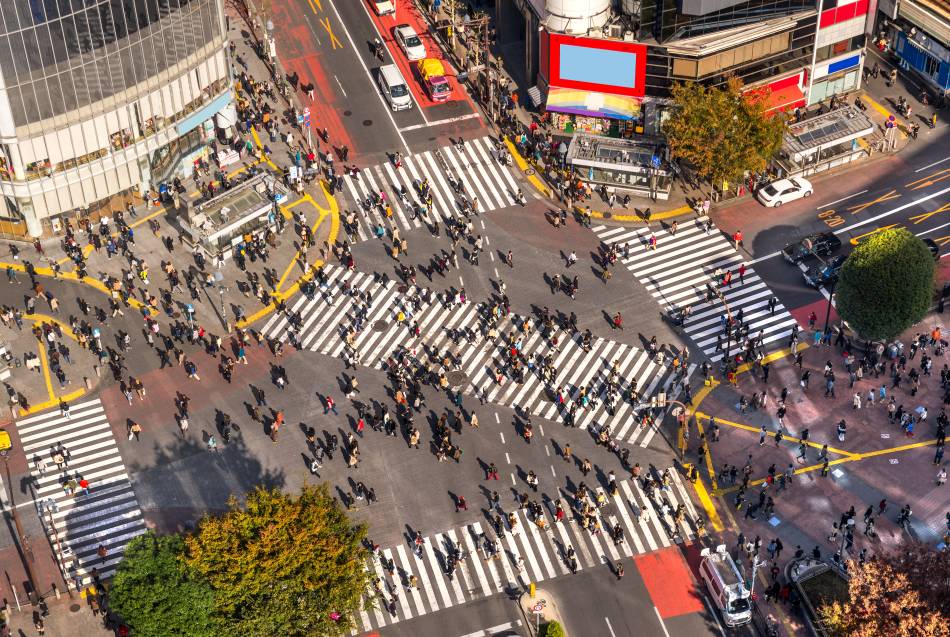
Use the Crossing as an arrival image, not the entire visit. Watch one cycle, understand the direction of the district, then leave the intersection. The walk becomes more memorable when Shibuya is the loud first chapter rather than a photograph repeated from several corners.
If you want food, music streets, bars, or a longer nightlife plan, keep those decisions in the complete Shibuya guide. This route uses Shibuya to start a daytime transition; it does not attempt to compress every version of the neighborhood into the same half-day.
Stop 2: use MIYASHITA PARK to change direction
MIYASHITA PARK is useful here because it turns the route away from the station-front loop and toward Jingumae. Pause, confirm the weather and the group’s energy, and decide whether the day is becoming a shopping walk, a family route, or a direct move toward Cat Street.
Do not make every commercial floor a required stop. The park is connective tissue: a place to regroup before the street scale changes again.
Stop 3: Cat Street is the walk, not a shortcut
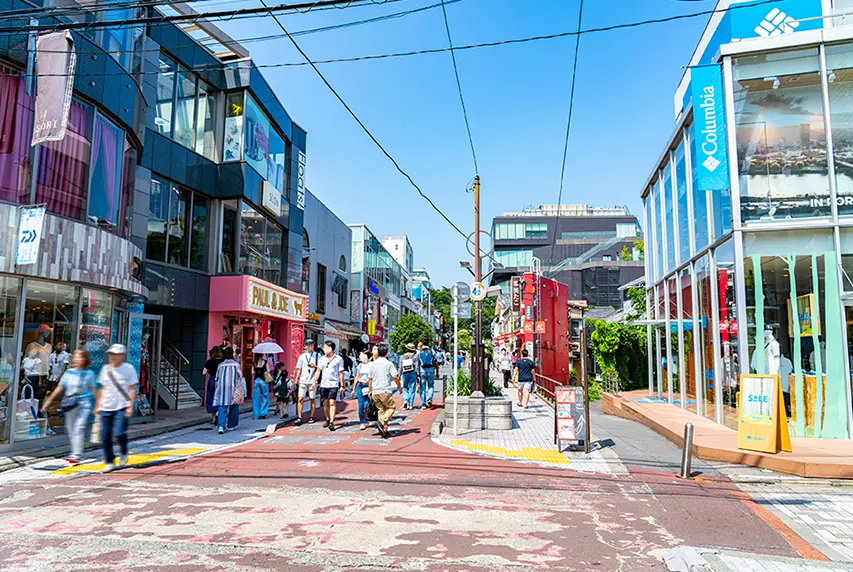
Cat Street is where the two neighborhood names begin to feel connected. The visual rhythm changes from major station frontage to a street shaped by fashion, smaller storefronts, and people moving at walking pace. That change is the reason not to take a train between Shibuya and Harajuku.
Shopping travelers can slow down here. First-time visitors should choose a few windows or shops and keep moving. Families should avoid turning every interesting storefront into a negotiation; one chosen stop protects the rest of the route.
Three pauses that make the route feel lived in
The walk becomes dull if every stop is either a landmark or a booking. These three pauses are useful precisely because none needs an affiliate link. Choose one according to the group’s energy; doing all three would turn a flexible walk back into a checklist.
Use the public rooftop park to look back at Shibuya, sit down, and decide whether the group still wants shopping, coffee, or a direct walk toward Harajuku. The public park and the shops operate as different parts of the complex, so check the live facility information rather than assuming every area keeps the same hours.
This independent stop fits the Cat Street chapter because the official shop describes a single-origin coffee focus and lists its address on Jingumae 5-chome. Choose it when a conversation over coffee would improve the walk more than another store. It is included editorially and is not an affiliate placement.
At Tokyu Plaza Omotesando “Omokado,” the sixth-floor rooftop garden gives the route another place to slow down before Harajuku. The facility FAQ says food and drink there must be purchased inside the building, so treat it as a rest point with a simple house rule, not a picnic stop.
If the group needs a full meal rather than coffee, choose it by timing: eat near Cat Street when shopping is the main event, or wait until Harajuku when the meal should close the walk. We will keep restaurant recommendations separate from the core route so openings, reservations, and affiliate availability can be checked without making the walk depend on one business.
Stop 4: Omotesando changes the design language
Omotesando is not simply expensive shopping added to Harajuku. It changes the scale again: broader movement, architecture, cafés, and a more adult design atmosphere. Use it as the visual bridge between Cat Street’s streetwear energy and the more concentrated pop culture around Harajuku.
The GO TOKYO area guide gives a public walking reference between Shibuya and Omotesando, but real walking time grows with signals, crowds, photographs, and shopping. Plan the half-day around attention rather than a stopwatch.
Within stop 4: choose your Harajuku, do not consume all of it
Harajuku can mean Takeshita Street, fashion, sweets, youth culture, quieter side streets, or simply the moment the group realizes how different this feels from the Shibuya start. Choose one version. The route loses its shape when every shop, snack, and side street becomes mandatory.
For a family, let each child or traveler choose one Harajuku priority. For a shopping route, this is where you may decide that Meiji Jingu belongs on another morning. For a first visit, retain enough time for the contrast at the end.
Stop 5: finish with Meiji Jingu’s quiet
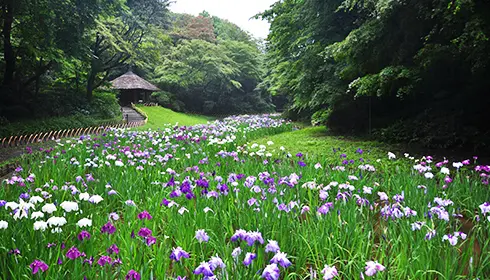
Meiji Jingu’s official visitor information states that the shrine opens at sunrise and closes at sunset, with monthly times published by the shrine. Check the live time on the day rather than relying on a fixed hour copied into an itinerary.
Approach the shrine as a place of worship, forest, history, and quiet. Do not treat it as a promise of supernatural results. The value in this walk is the change in atmosphere: after Shibuya, shopping streets, and Harajuku, the approach asks the group to lower its pace and attention.
When to reverse the route
Start at Meiji Jingu, then Harajuku, Omotesando, Cat Street, and Shibuya when you begin later in the day, when seasonal sunset makes a Shibuya-first finish impractical, or when the shrine is the non-negotiable part of the visit. Ending in Shibuya also works when dinner, lights, or nightlife should become the second half of the day.
The reverse route changes the memory. Instead of watching Tokyo become quiet, you watch it become progressively louder. Neither direction is automatically better; choose the ending you want to carry into the evening.
Four practical versions
First-time Tokyo: motion to quiet
Crossing to MIYASHITA PARK, Cat Street, one short Harajuku choice, and Meiji Jingu. Skip the urge to complete every shopping street. This version gives the clearest emotional contrast.
Shopping: streetwear to design
Shibuya to Cat Street, Omotesando, and Harajuku. Add Meiji Jingu only after checking its live closing time and the group’s pace. The shops are the purpose, so the route should not pretend otherwise.
Family: one stimulus, one reset
Keep the Crossing short, pause around MIYASHITA PARK, choose one Harajuku interest, and use the quieter shrine approach if everyone still has energy. Remove stops before the group becomes tired enough to dislike the final chapter.
Rain: preserve the transition, shorten exposure
Use Shibuya’s station-connected interiors, keep the outdoor links purposeful, and choose indoor stops around the route. Omotesando can remain the direction of travel even when the shopping and café breaks carry more of the day. Make Meiji Jingu a weather-dependent choice.
What to reserve, and what to leave open
This walk itself is free and should stay flexible. Do not reserve ordinary shopping, snacks, or every pause. Book only an experience that has a genuine fixed slot and is important enough to organize the route around.
Choose the small-group Kawaii Food Tour when the memory you want is Harajuku's color, food, and conversation held together by a guide rather than another afternoon of browsing. The current listing describes a Harajuku-to-Omotesando route with five food stops, lunch, dessert, and one drink. Treat its fixed three-hour format as the second half of the day, not an extra task after completing the full walk.
See Harajuku food-tour dates and current priceChoose the small-group nerikiri-and-matcha class when looking at sweets is less memorable than shaping them yourself. The current listing places the meeting point in Jingumae and describes four sweets in a group of up to four travelers. Reduce the shopping portion on a booked day; this is an alternative to the food tour, not a second reservation.
See nerikiri-class dates and current priceLive availability, meeting instructions, inclusions, dietary suitability, accessibility, cancellation terms, and prices can change. Confirm the selected date on Viator before organizing the walk around either experience.
Street kart is a different way to experience the same modern-city arc. Choose it only when driving through Shibuya, Harajuku, and Omotesando is the memory you want and every driver has confirmed the operator’s accepted original physical documents. Compare that format in Best Tokyo Street Kart Tours; do not use it as a substitute for the walk by accident.
Before you leave Shibuya
- Check Meiji Jingu’s official closing time for the current month and reverse the route if necessary.
- Decide whether the day is led by contrast, shopping, family pace, or rain protection.
- Choose one Harajuku priority rather than carrying an unlimited list.
- Keep dinner and ordinary shopping flexible unless a timed reservation genuinely matters.
- If the route should continue into nightlife, return to the Shibuya guide before booking a bar or club format.
Continue planning Tokyo block by block
Use the Tokyo 2-day itinerary for first-time visitors to place this half-day after connectivity and neighborhood decisions. Use Choose Tokyo by Neighborhood when Shibuya and Harajuku may not be the right district pair for the trip. Return to Shibuya for food, music streets, nightlife, and live experience choices.
Sources and notes
- GO TOKYO, Shopping in Shibuya, accessed 2026-08-31. Cat Street connection between Shibuya and Omotesando checked here.
- GO TOKYO, Shibuya, accessed 2026-08-31. Hero image of Shibuya Scramble Crossing borrowed from this public tourism page.
- GO TOKYO, Exploring Harajuku, accessed 2026-08-31. Public route context for Meiji Jingu, Omotesando, Cat Street, and Takeshita Street.
- GO TOKYO, Harajuku, accessed 2026-08-31. Current neighborhood context and Cat Street image.
- GO TOKYO, Meiji Jingu, accessed 2026-08-31. Inner Garden image and public visitor context.
- GO TOKYO, Aoyama and Omotesando, accessed 2026-08-31. Public Shibuya-to-Omotesando walking reference.
- MIYASHITA PARK, Access, accessed 2026-08-31. Official station-access context.
- MIYASHITA PARK official site, accessed 2026-08-31. Public rooftop park, retail, food, sport, and leisure roles checked here.
- The Roastery by Nozy Coffee, accessed 2026-08-31. Official concept, Jingumae address, contact, and live shop information checked here. This is an editorial, non-affiliate mention.
- Tokyu Plaza Omotesando “Omokado,” rooftop FAQ, accessed 2026-08-31. Omohara Forest food-and-drink rule checked here.
- Meiji Jingu, Visit, accessed 2026-08-31. Sunrise opening, sunset closing, and monthly visitor times.
- Kawaii Food Tour of Harajuku and Omotesando, Viator, accessed 2026-08-31. Product code
31383P21; route, duration, inclusions, group size, availability, price, and booking terms can change by departure. - Harajuku Small-Group Sweet-Making Class, Viator, accessed 2026-08-31. Product code
391269P1; meeting instructions, inclusions, group size, availability, price, and booking terms can change by departure. - Conditions, access routes, construction, events, and opening information can change. Check the linked official sources before the walk.