Experiences in Japan
How to Buy Sumo Tickets in Japan (2026 Guide)
Affiliate disclosure: This page contains affiliate links. If you book or buy through them, we may earn a commission at no extra cost to you. As an Amazon Associate we earn from qualifying purchases.
CHOOSE YOUR NEXT STEP
- Feel the arena come alive at a real grand sumo tournament.
- Choose your city and tournament date before comparing seats.
- An English-guided package can explain the bouts as you watch; official tickets suit an independent visit.
- Confirm available dates, the exact seat, ticket collection and cancellation terms before payment.
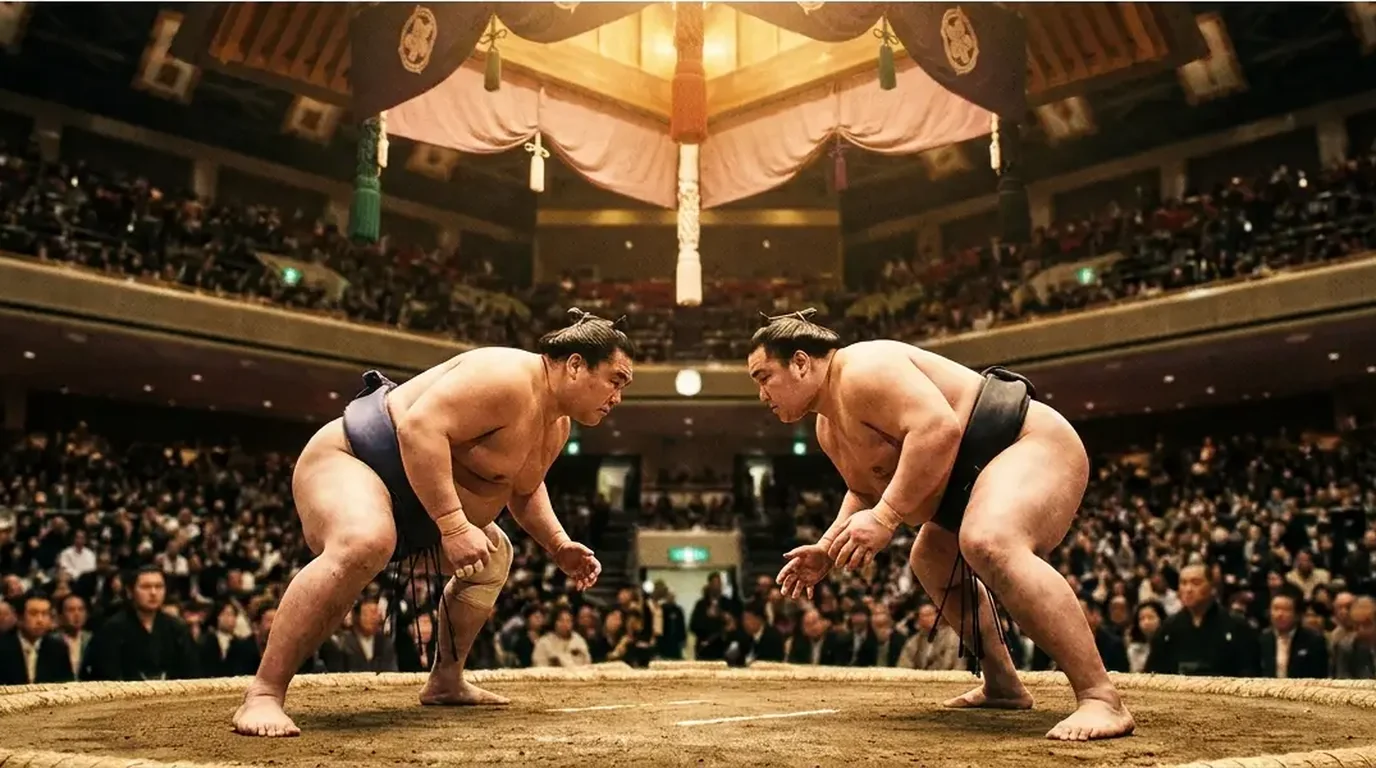
Feel the hush before a bout, then the arena erupt. For a real grand sumo tournament, choose your city and date first, then the seat and booking route. An English-guided visit adds explanations as you watch; an official seat suits an independent day.
Where will you watch? Choose your city before opening a booking page:
- Fukuoka in November: go to the Fukuoka tour, ticket handover and venue-access guide.
- Tokyo from January 2027: check the official sale date and ticket collection route. Guided-tour listings need a live date check when new tournament plans appear.
- Dates not fixed: start with the tournament calendar, then compare booking routes.
Guided Tokyo packages are not tickets to a tournament in another city.
Want to enjoy sumo, not just buy a ticket? Meet the wrestlers, understand the rules, and discover life in a sumo stable.
Before choosing a booking button: match the tournament city to your trip, check a date and seat for your party, then check how the actual entry ticket reaches you. A booking voucher alone may not admit you to the arena. The short decision table puts these checks side by side.
Official-ticket check: October 10, 2026. September’s Tokyo tournament has ended. November 8–22 is in Fukuoka, not Tokyo; its official availability table shows every listed date and seat category sold out. A guided tour may have a separate allocation, but we could not confirm a bookable tour date today. Check your date and seat on the operator’s live reservation screen before treating it as an alternative. If none appears, the next Tokyo tournament is January 10–24, 2027, with official sales scheduled for December 5, 2026. Check the Japan Sumo Association’s calendar.
Visiting Fukuoka in November?
Watch the real November tournament with an English-speaking guide explaining the bouts. Japan Wonder Travel lists a Fukuoka-specific chair-seat tour, with the tournament ticket handed to you by the guide at Fukuoka Kokusai Center. Food, transport and hotel pickup are not included. The official seats are sold out, and we have not confirmed current tour availability.
Direct-booking check, September 21, 2026: the operator’s reservation screen offered November 11 at 2:30 pm, Chair C, for one adult at ¥19,000 including taxes and fees. This is a checked example, not a guarantee for every date or party size. Use the live reservation screen: some overview text still refers to the previous year.
Check live Fukuoka tour dates and seats
If your date or seat is not offered, do not book a Tokyo tour for Fukuoka. Plan for the next official tournament sale instead.
This is a direct, non-affiliate booking option. Confirm your 2026 date, seat class and meeting instructions before payment. Its published cancellation policy retains a 5% transaction fee even eight or more days before the tour, with higher charges closer to departure; do not assume a Viator cancellation policy applies to this direct booking.
Getting to the Fukuoka tournament from Hakata or Tenjin
The venue is Fukuoka Kokusai Center (福岡国際センター), 2-2 Chikko-honmachi, Hakata-ku. Save that exact venue name when planning your route.
- From Hakata Station: use Nishitetsu bus 99 toward Hakata Pier from Fukuoka Center Building stop F. Get off at Kokusai Center–Sun Palace-mae (国際センター・サンパレス前).
- From Tenjin: use Nishitetsu bus 80 toward Chuo Futo from Solaria Stage-mae stop 2A, getting off at the same stop.
These are venue-access routes, not tour meeting instructions. For a guided booking, follow the meeting point and arrival time on your confirmation; arriving at the arena does not itself collect your ticket. Japan Sumo Association’s official Fukuoka access guide checked September 22, 2026. Recheck the route before travel.
Who this isn’t for
If your trip does not overlap a grand tournament, skip the tournament-ticket comparison. Morning practice visits are a separate experience, not a tournament. If your dates do fit, choose between an independent visit with official tickets and a guided package.
Everyone else, a visitor from the US, UK, Australia, or Canada who wants a real reserved seat at a tournament and does not want to gamble on a resale site, is who this is for.
How we picked
Five things, in this order, because they are the five that decide whether you get in and how much you overpay.
Is it legitimate. The Japan Sumo Association warns that unofficial resale sites cause frequent problems, and Tokyo’s official travel guide lists only a short set of authorized sellers. A ticket refused at the door is worse than no ticket, so a route has to trace back to an authorized source to make this list.
Real cost, face value plus markup. Official seats have a fixed face value. Every reseller, shopper, and tour adds something on top, sometimes a small handling fee and sometimes a full guided-experience premium. We separate the face value from the markup so you can see what you are paying for.
Seat choice. Ringside tamari cushions, tatami masu boxes and arena chairs offer different ways to watch. Compare the exact category and number of guests covered by the ticket. Do not assume a separate unreserved or walk-up allocation exists.
Ticket collection. Compare the actual collection method, not just the booking language. Official tickets are printed at Seven-Eleven in Japan; the Japan Wonder Travel package provides the tournament ticket through your guide. A phone booking voucher is not automatically an arena-entry ticket.
How hard it is to actually get. Popular Tokyo days sell out within minutes of release, so a route that only works if you win the release-day scramble is riskier than one holding an allocation.
How the sumo calendar works, and the windows open now
Sumo holds six grand tournaments, called honbasho, one in each odd month. Each runs fifteen days, opening and closing on a Sunday, and only these count toward a wrestler’s ranking. Three are in Tokyo, the others in Osaka, Nagoya, and Fukuoka. Official sales open roughly five to seven weeks before each tournament, at 10:00 Japan time on a Saturday, and the official site posts the exact date several months ahead. Popular Tokyo days sell out fast, so the on-sale Saturday is the date to plan around, not the tournament itself.
2026 and announced 2027 tournaments (Japan Sumo Association calendar, rechecked October 7, 2026):
| Tournament | Dates | Venue | City | Official tickets on sale | Status on Sep 21, 2026 |
|---|---|---|---|---|---|
| Aki (September 2026) | Sep 13 to 27, 2026 | Ryogoku Kokugikan | Tokyo | Went on sale Aug 8, 2026 | Sold out, all dates. No same-day tickets. |
| Kyushu (November 2026) | Nov 8 to 22, 2026 | Fukuoka Kokusai Center | Fukuoka | Opened Sep 19, 2026 | Official availability table: all listed dates and seat categories sold out. Tour allocations must be checked separately. |
| Hatsu (January 2027) | Jan 10 to 24, 2027 | Ryogoku Kokugikan | Tokyo | Sat Dec 5, 2026 | Announced |
| Haru (March 2027) | Mar 14 to 28, 2027 | EDION Arena Osaka | Osaka | Sat Feb 6, 2027 | Announced by the Japan Sumo Association; see date discrepancy below |
| Natsu (May 2027) | May 9 to 23, 2027 | Ryogoku Kokugikan | Tokyo | Sat Apr 10, 2027 | Announced |
| Nagoya (July 2027) | Jul 11 to 25, 2027 | IG Arena | Nagoya | Sat May 15, 2027 | Announced |
| Aki (September 2027) | Sep 12 to 26, 2027 | Ryogoku Kokugikan | Tokyo | Sat Aug 7, 2027 | Announced |
| Kyushu (November 2027) | Nov 14 to 28, 2027 | Fukuoka Kokusai Center | Fukuoka | Sat Sep 18, 2027 | Announced |
For Osaka in March 2027, the Japan Sumo Association lists February 6 as the ticket-sale date; Ticket Oosumo’s English overview currently says February 8 with a conflicting Saturday label. We use the Association’s calendar above. Recheck the official sales notice before planning your purchase. The earlier 2026 tournaments (January, March, May, July) are finished.
A tour operator may have a separate allocation, but an active product page does not establish availability. Open your exact date and party size before treating any package as a sold-out-ticket alternative.
Choose a booking route for your actual tournament
| Your trip | Route worth checking | What you get and how you enter | Check before paying |
|---|---|---|---|
| Fukuoka, Nov 8–22, 2026 | Japan Wonder Travel’s Fukuoka tour, booked directly with the operator | A chair-seat tournament ticket handed over by the English-speaking guide. Follow the tour meeting instructions, not just the arena address. | Select your date, party size and chair class on the live screen. A Nov 11 option was observed Sep 21; that is not today’s inventory. Check the total and the operator’s cancellation charges. |
| A later tournament, including Tokyo in Jan 2027 | Ticket Oosumo official English sales when that tournament’s sales open | An independent seat at face value plus the published fees; print the ticket at Seven-Eleven in Japan. | Check the on-sale date, available seat category and collection email. The English route does not sell every category; purchased tickets cannot be changed or cancelled. |
For the November Fukuoka tournament, the official availability table showed all listed categories sold out on October 7. A direct tour is a separate booking check, not a promise of a seat. Tokyo’s September tournament has ended; a Tokyo tour listing does not establish January seats. If no grand tournament overlaps your trip, a morning-practice visit is a different experience, not a substitute ticket.
Other routes remain documented below, but they are not the lead booking choices: the Tokyo Klook package displayed “Currently unavailable” on September 21; BuySumoTickets was not accepting September or November orders; the old GetYourGuide product redirected to a general listing; and the byFood premium-seat listing was unavailable. Recheck those providers rather than assuming a listing has reopened.
Face-value prices come from the official ticket site’s September and November 2026 tournament pages, read August 26, 2026. The guided-tour example below records a specific September 21 search, not a current starting price. Compare live totals only after selecting the same date, party size and seat category.
Booking routes: inclusions, handover and limits
Ticket Oosumo, the official site and the real face value
Ticket Oosumo, run by Pia for the Japan Sumo Association, is the only route that sells at face value with no tour markup, and it does have an English site that accepts overseas credit cards. Face values on the official September 2026 Tokyo page, read August 26, 2026, were: second-floor chair seats ¥3,500 to ¥9,500 by class and day (C to S, weekday to weekend), tatami box seats ¥34,000 to ¥60,000 per box of four (about ¥8,500 to ¥15,000 a head), and ringside seats ¥20,000 per person. The November 2026 Fukuoka page lists a wider spread, from ¥2,000 weekday chair seats up to ¥20,000 ringside, plus two-person options at ¥19,000. The November page also states payment is credit card only with a ¥2,000 charge per ticket, so budget that on top of face value.
Best for an independent visit when seats are available and you can collect the printed tickets in Japan.
Choose the sales language as well as the seat. The official September Tokyo and November Fukuoka pages label ringside and Box S seats as Japanese-site only, checked September 22, 2026. Seeing a category in the English price list does not mean the English purchase route sells it. Check the category’s sales channel before planning around that seat; this is not an availability confirmation.
Before you pay: the official November page specifies credit-card payment, a ¥2,000 service fee per ticket, collection at Seven-Eleven in Japan, and no changes or cancellations after purchase. Follow the purchase confirmation screen and email for collection instructions. These conditions were checked September 21, 2026. We have not verified a Japanese-address or Japanese-phone requirement for the English purchase flow; it is not a reason to rule out official tickets. The September Tokyo tournament has ended, and the official November Fukuoka seats are sold out as of October 7. If you need mobile data for your booking confirmation, see our Japan eSIM comparison.
Collecting official tickets at Seven-Eleven
Save your purchase-completion email before traveling. Ticket Oosumo directs buyers to that email and the completion screen for the exact collection instructions.
Pia’s general collection guide says to take the 13-digit ticket-exchange number to the cashier, who prints the tickets. Check the collection start date in your confirmation before going to the store; do not substitute a different order or purchase ID for the collection number.
The general guide covers multiple sales services. Your sumo confirmation remains the authority for the number and collection window; we have not verified a universal sumo pickup deadline or waiting period. This is printed-ticket collection, not the guide handover used by a tour package.
Sources checked September 22, 2026: Ticket Oosumo’s November instructions (https://sumo.pia.jp/en/sumo11.jsp) and Pia’s general collection guide.
Same-day tickets: do not rely on a walk-up seat
The September 2026 Tokyo tournament has ended. Its official Ticket Oosumo notice ruled out same-day sales for that tournament; it is historical evidence, not a same-day policy for the next tournament. Arriving early does not create a ticket allocation.
For a future tournament, check its own official notice before planning a walk-up visit. This guide has not verified a current separate unreserved allocation, cash-only procedure or same-day price.
If a tournament date is essential to your trip, use a confirmed advance ticket or a date-specific guided allocation. Check the official notice before making the journey.
BuySumoTickets, a shopper who buys the official ticket for you
September 21, 2026 acceptance check: its homepage says September and November tournament tickets and waiting lists are closed, and January tournament orders are not being accepted. Do not send requests for those tournaments based on the general service description below. Special events and practice visits are separate from grand tournaments.
BuySumoTickets is a personal-shopper service that buys official tickets on your behalf and offers shipping or delivery to a Japan hotel. Its appeal is collection assistance without a full guided tour. Check the acceptance notice above before considering this route.
Best for a buyer who wants a specific seat type at closer to face value, without joining a full guided tour, and is comfortable arranging it by email. Because the shopper is inside Japan, it also solves the Seven-Eleven printing problem for you.
The weakness is price transparency. The site does not publish its fees or a fixed price, so you get a quote by email rather than a number up front, and it does not spell out its ticket-authenticity terms on the page. You are trusting a third party and paying an unstated markup over face value, so confirm the seat, the total, and the delivery method in writing before you commit.
Klook, a Tokyo chair-seat tournament with an English-speaking guide
Not currently bookable: on September 21, 2026, the live Klook page displayed “Currently unavailable” instead of a booking calendar. We have removed this product as our featured booking choice. Use its link only to check whether sales have reopened, not as a confirmed way to secure a seat now.
The linked Klook product combines tournament viewing at Ryogoku Kokugikan with an English-speaking guide. It lists a 3-hour-30-minute group visit and describes meeting at JR Ryogoku Station. The appeal is understanding the rituals and bouts while sharing the arena atmosphere, rather than receiving a bare seat ticket. On September 21, 2026, the page displayed 4.8/5 from 45 reviews and 1K+ booked.
This format suits a first-time visitor who wants an English explanation during a Tokyo tournament. If sales reopen for your dates, check the chair category and meeting instructions; a phone voucher alone is not direct arena entry.
The current date-specific price and remaining seats were not confirmed in this check. Compare the package total with official ticket prices and decide whether the guiding is worth the difference for your trip. This is a Tokyo tournament product, not a ticket to November’s Fukuoka tournament.
Viator, Japan Wonder Travel's Tokyo tournament with an English guide
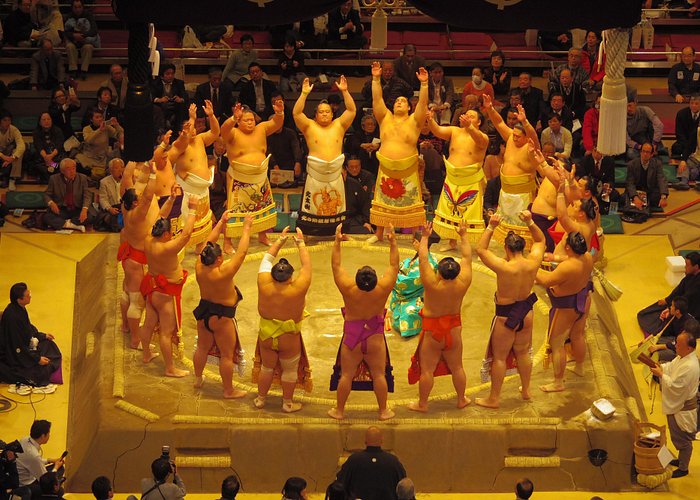
Hear why the crowd reacts as the bouts unfold. This approximately 3.5-hour Tokyo tournament experience includes a local English-speaking guide and a tournament ticket handed to you by the guide on the day. The listing displayed 4.9/5 from 1,157 reviews and a 97% recommendation rate on September 21, 2026.
Historical booking example, checked September 21, 2026: a search for September 22, two adults returned Chair B at 2:30 pm for ¥62,000 total with a Book now button. This option included a pictorial sumo ranking list, not lunch. Chair S and Chair C with lunch were sold out for that search. This records that search only; it does not establish remaining seats for today or a later date.
The selected September 22 option was non-refundable, despite the general page advertising cancellation up to 24 hours before the experience. Use the terms shown for your selected date. Tickets come from the guide; follow your booking’s meeting instructions, not direct arena entry with a phone voucher. The itinerary describes Ryogoku Station’s West Gate, while lunch plans use a different meeting place. This product is for Tokyo, not November’s Fukuoka tournament. The old JTB premium-seat listing has been replaced because it is not currently bookable.
Review this guided tour's details; January dates are not verified
GetYourGuide, a guided chair-seat package
The previously linked chair-seat product redirected to a general Tokyo tours page when checked on September 21, 2026. We have paused that specific recommendation. Its old price, review count and cancellation terms should not be used to choose a current booking.
Authorized tours and hotel concierge, the hands-off premium
Availability as of September 22, 2026: the previously linked byFood premium-seat experience displays “This experience is unavailable right now.” We have removed its old price and purchase button from the comparison.
That specific listing describes a premium seat, an English-speaking guide, one yakitori skewer and one drink, not a chanko dinner. It describes paper tickets supplied on the event day and a meeting at JR Ryogoku Station’s West Exit. These are the unavailable listing’s conditions, not a confirmed 2026 booking offer.
For a tour or hotel-concierge arrangement, ask for the exact tournament date, seat, included food, ticket handover and total price. A separate chanko-dinner tour is a different product; neither its availability nor its terms carry over to this listing.
Which route should you use
Budget first. Compare official chair-seat categories when advance sales are open. Do not budget around an unverified walk-up ticket; September 2026 Tokyo has no door sales.
Understand the bouts as you watch. The Japan Wonder Travel Tokyo option checked above illustrates what a guided ticket can include, but our observed bookable date was in the completed September tournament. For January 2027, first confirm that a new date appears; then inspect the seat, total and cancellation terms. Klook’s previously recommended Tokyo product was unavailable in our last check.
Ticket-only assistance. Check BuySumoTickets’ acceptance notices before considering a request; its current closures are listed above.
A particular seat or meal. Check the exact category and inclusions: the historical Chair B example is not a premium box or a lunch package. The previously linked JTB premium-seat product is currently unavailable.
An independent day at the arena. Check Ticket Oosumo first for official seats and fees, then plan ticket collection in Japan. Choose a guided package for its explanations and included service, not because this guide has established a Japanese-contact requirement.
Help with arrangements. Ask a tour operator or your hotel concierge for a current, date-specific offer. The old byFood premium-seat listing above is not currently bookable.
Making a full Tokyo day of it. Keep the meal in Ryogoku when the arena neighborhood should remain the memory: the Ryogoku restaurant guide compares chanko, Japanese dining and bookable tables nearby. If a lantern-lit dinner on the water should follow instead, our yakatabune dinner cruise guide explains Tokyo Bay’s traditional houseboats.
FAQ
Can foreigners buy sumo tickets on the official site? Ticket Oosumo offers an English purchase route. The official November page specifies credit-card payment and ticket printing at Seven-Eleven in Japan; use your confirmation screen and email for collection instructions. We have not verified a Japanese-address or Japanese-phone requirement. For a guided booking, use the selected product’s meeting and ticket-handover instructions rather than assuming a phone voucher admits you directly.
Are resale sites like viagogo or StubHub safe? Treat them with caution. The Japan Sumo Association warns that unofficial resale sites cause frequent problems, and Tokyo’s official travel guide lists only a short set of authorized sellers. Buyers and guides report tickets from unofficial resellers being refused at the door, and masu boxes split and sold as single seats, which can leave you sharing a four-person box with strangers. Sticking to authorized routes avoids both risks.
What are the sumo seat types and prices? Official face values for the September 2026 Tokyo tournament (read August 26, 2026): ringside ¥20,000 per person, tatami box seats ¥34,000 to ¥60,000 per box of four (about ¥8,500 to ¥15,000 a head), and second-floor chair seats ¥3,500 to ¥9,500 by class and day. Fukuoka in November 2026 starts lower, from ¥2,000 for a weekday chair. Add the official site’s ¥2,000 per-ticket charge. Prices vary by tournament and by weekday versus weekend, so confirm on the official page.
Are same-day tickets available? Not for September 2026 Tokyo: the official site explicitly says there are no door sales. For another tournament, check that tournament’s official sales notice; do not assume that arriving early guarantees an unreserved ticket.
When do tickets go on sale? Use the tournament calendar above for the announced sale dates. The Japan Sumo Association’s schedule, checked September 22, 2026, lists February 6, 2027 for Osaka’s March tournament, not February 8. It also lists August 7 for September 2027 Tokyo and September 18 for November 2027 Fukuoka. Confirm the opening time on the specific ticket-sales notice; a calendar date does not guarantee remaining seats.
What is a masu box seat, and can one or two people buy one? A masu is a box area where spectators sit on cushions after removing their shoes. Standard boxes commonly accommodate four guests and are sold by the box, but not every category requires a four-person purchase.
For November 2026 in Fukuoka, the official list includes Special C Box Seats for two guests at ¥19,000 per box. It separately lists Pair Seats with table at ¥19,000 for two guests; those use chairs, not cushion seating. These are listed face values, not available-seat offers. The official availability check above showed sold out. Official November seat categories, checked September 22, 2026.
For a solo visit, compare an individual chair ticket with the cost of the whole selected box. For two people, compare the exact two-person category where offered, the total including fees, and whether you prefer cushions or chairs. Do not carry Fukuoka’s categories over to another tournament without checking its own seat list.
Do I need to be in Japan to receive the tickets? Follow the exact product’s collection or meeting instructions; a booking voucher is not necessarily an arena-entry ticket. The linked Japan Wonder Travel tour on Viator provides the tournament ticket through your guide on the day. Use the meeting point on your selected plan. For official tickets, check the selected tournament’s collection instructions before payment. Confirm your date, seat and collection route together.
Bottom line
Start with the tournament that matches your trip, then choose the seat and support you want. Official tickets suit an independent visit; a guided package adds explanations while you watch. November’s tournament is in Fukuoka, where direct-tour inventory must be checked separately from sold-out official seats. The next Tokyo tournament is January 10–24, 2027, with official sales scheduled for December 5, 2026. Do not treat a September Tokyo tour example as a January booking. Finish only after confirming your date, seat, total and ticket collection.