Experiences in Japan
Your First Sumo Match: Rules, Wrestlers and Life in a Stable
Affiliate disclosure: This page contains affiliate links. If you book or buy through them, we may earn a commission at no extra cost to you. As an Amazon Associate we earn from qualifying purchases.
Sources checked September 21, 2026.
Pick a wrestler to follow. Watch his feet at the edge of the ring. Suddenly, a match you barely understood becomes a contest you want him to win.
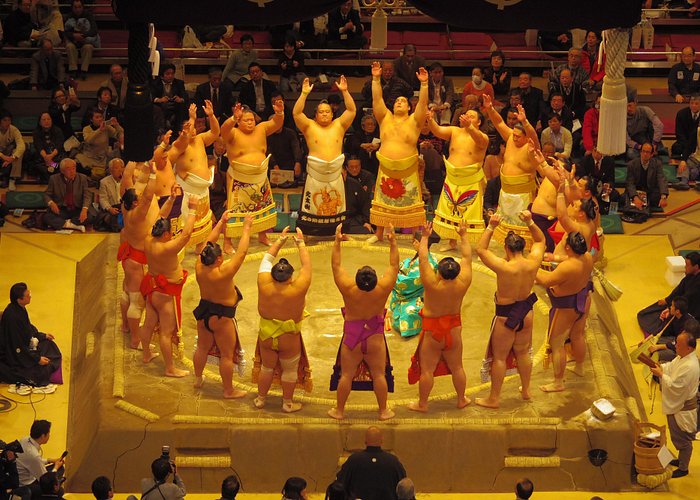
You do not need to memorize Japanese terminology before watching sumo. Start with these three things.
1. Watch the feet and the first touch
A wrestler loses when a body part other than the soles of his feet touches the ground, or when he touches the ground outside the ring. A fingertip can decide a bout. There are no weight classes, so size alone does not tell you who will win.
2. The build-up is part of the contest
The salt purifies the ring. Before the charge, the wrestlers face one another and prepare their start. Watch their posture and attention rather than treating this as empty time between matches.
3. Stay for more than the final collision
The top-division ring-entry ceremony introduces the wrestlers in decorated ceremonial aprons. At the end of the day’s bouts, the bow-twirling ceremony gives the afternoon a distinct finish.
Source: Japan Sumo Association’s illustrated introduction, rules and ceremonies sections. Its historical headcounts are not used as current statistics.
Three names to recognize and what to watch
These are editorial starting points, not predictions or a promise that every wrestler will compete on your visit. Rank and September status below were checked on September 21, 2026, through Day 9.
Onosato: follow the forward pressure
From Tsubata in Ishikawa, Onosato belongs to Nishonoseki stable. His professional debut came in May 2023; his yokozuna promotion is recorded for July 2025. That short journey to sumo’s highest rank gives a newcomer a story to follow beyond the scoreboard.
His official specialties include thrusting, pushing and belt-based force-outs. Our viewing tip: watch whether he can keep his opponent moving backward after the opening charge. Off the dohyo, his official questionnaire lists exploring sweets as a hobby.
September snapshot: East yokozuna, eight wins and one loss after Day 9. Official profile and results.
Aonishiki: look for the grip
Aonishiki comes from Vinnytsia, Ukraine, and represents Ajigawa stable. He says he began sumo at seven. His professional debut was September 2023, followed by his top-division debut in March 2025.
His official specialties are a right-hand-inside grip and driving his opponent out. Our viewing tip: instead of watching only the wrestlers’ heads, look at the hands and belt position. His questionnaire also names Ukrainian boxer Oleksandr Usyk as an athlete he supports, a small connection to the person behind the ring name.
September snapshot: East ozeki, six wins and three losses after Day 9. Official profile and results.
Hoshoryu: a name for your longer-term watchlist
From Ulaanbaatar, Mongolia, Hoshoryu belongs to Tatsunami stable. He reports starting sumo at seventeen; his professional debut was January 2018, and his yokozuna promotion is recorded for March 2025. His official specialties include throws as well as belt-based force-outs. When watching his bouts, look for changes in balance and direction, not just straight-ahead power.
Not a September appearance recommendation: his official record shows nine days absent through Day 9. Learn the name, but do not buy a ticket expecting to see him compete. Official profile and current results.
Behind the bout: training, food and life together
The short contest in the arena has a much longer preparation behind it. A June 2018 reporting visit to Takadagawa stable offers one concrete example, not a fixed timetable for every stable today.
Morning: most wrestlers were stretching by seven, then repeating leg stamps, sliding steps and striking-post exercises. Practice bouts followed, with wrestlers changing opponents. Some left training early to prepare the shared meal.
After training: bathing and lunch followed in rank order. The table included hotpot alongside dishes such as sashimi, stir-fries and salad. Chanko means the wrestlers’ meal, not exclusively the familiar hotpot; even curry can be chanko.
Afternoon: the report describes a nap, then time before dinner, with cleaning and laundry duties for some residents. Read the original Takadagawa reporting (Japanese; published August 2018).
Arashio stable’s own recruitment Q&A emphasizes adapting to communal life and repeatedly studying how to use one’s body. That is another way to watch a bout: not simply two large men colliding, but practiced movement emerging from daily work together.
How much do they eat?
The Takadagawa report describes repeated bowls of rice and a varied meal, but does not give a measured daily calorie intake for an individual wrestler. It supports a look at what was served, not a universal “every wrestler eats X calories” headline.
Choose your way into sumo
Want to see the contest unfold in person? Find a tournament that fits your trip, compare booking routes, and check how to collect your ticket.
Already have tickets? Use the three things above as your first-match checklist. You can learn the names of techniques as you go.