Bringing Japan Home
The Real One: A Takayama Chasen, Made by a Master, and Why It Costs 3x
Affiliate disclosure: This page contains affiliate links. If you book or buy through them, we may earn a commission at no extra cost to you. As an Amazon Associate we earn from qualifying purchases.
CHOOSE YOUR NEXT STEP
- Craft — Let the object at the centre of your matcha ritual carry a named Japanese maker.
- Wakasa Inoue connects the whisking motion to Takayama, Nara, rather than an anonymous replacement.
- Evidence: about $38, 80 prongs, named maker, Nara origin, and Takayama Kitemark.
- Choose it when maker and place matter; choose a basic whisk when cost matters more.
The short answer
Once matcha becomes a ritual rather than an experiment, an anonymous whisk can feel like the one disposable object in a practice built around attention. A Takayama chasen changes that feeling: the tool at the center of the bowl comes from a named maker and the Japanese place known for the craft. You are not only buying something that mixes powder; you are choosing a visible connection to the tradition that made the ritual desirable in the first place.
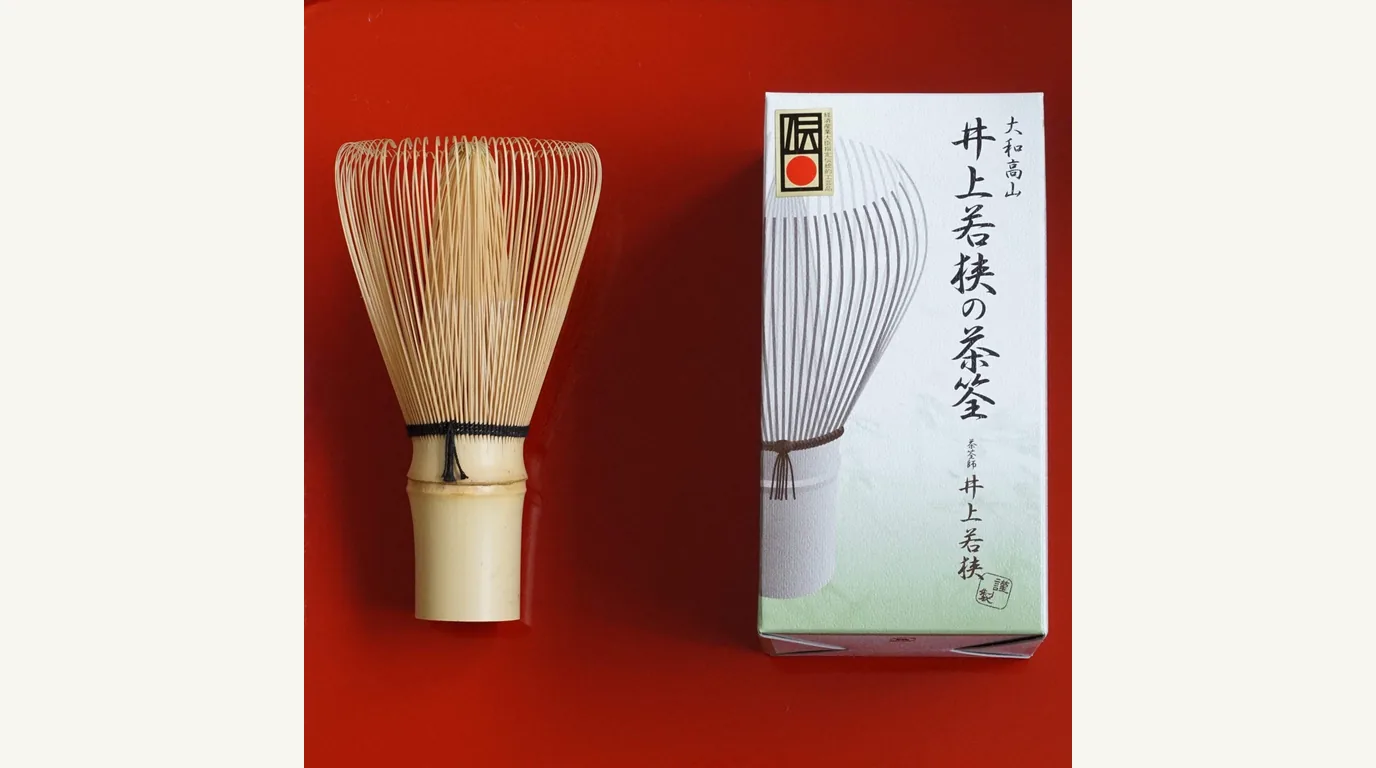
The functional proof is specific. This one is by Wakasa Inoue, an 80-prong chasen from Takayama, Nara, listed at about $38 on the maker’s own listing on August 24, 2026. The premium is for the hand-cut skill used to split one node of bamboo into the fine tines that make the whisk, with a maker and origin the seller names.
Why a chasen at all, and why from Takayama
Matcha is whisked rather than steeped, and the chasen is shaped for a quick side-to-side motion in the bowl. Its fine split bamboo tines are the defining tool of that preparation method. Other whisks can mix or aerate the drink, but they do not give you the same Japanese tool, hand motion or visual ritual. This is covered in full in our guide to choosing a bamboo whisk.
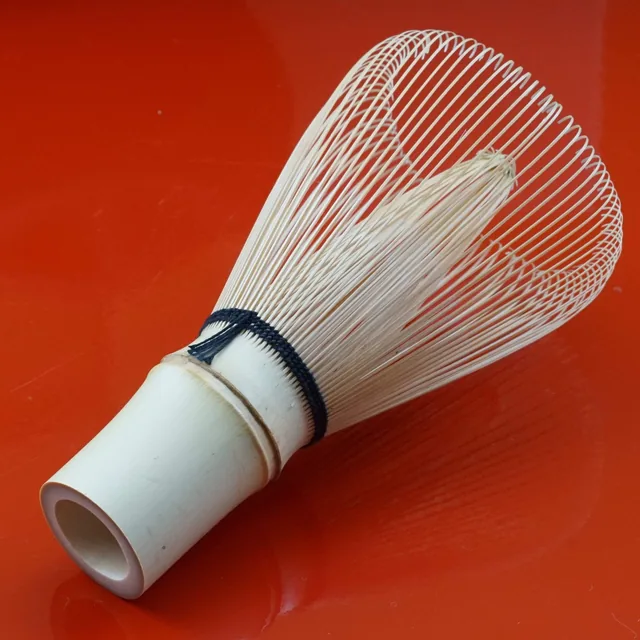
The town is the other half. Takayama, in Nara, is widely reported to make the large majority of Japan’s chasen, commonly cited at around 90 percent, in a craft passed down for more than five centuries and now kept by a small number of remaining masters. Whether or not the exact share holds, the point stands: Takayama is where the craft is concentrated, and “Takayama chasen” names that source the way “Champagne” names a region.
The maker: Wakasa Inoue
This is where the price goes, and the listing is specific about it.
By the seller’s account, Wakasa Inoue is a third-generation whisk maker, recognised as a master craftsman of traditional arts, who served a three-year apprenticeship under his father before he was permitted to sell his own work. The listing says the whisk carries the Nara Takayama Kitemark, the region’s mark of authenticity, and that his whisks are stocked in the Takashimaya department store in Tokyo, which is not where mass-market kitchenware usually ends up. We are relaying the maker’s and seller’s claims here, not certifying them, but they are the kind of specific, checkable claims a factory whisk does not make.
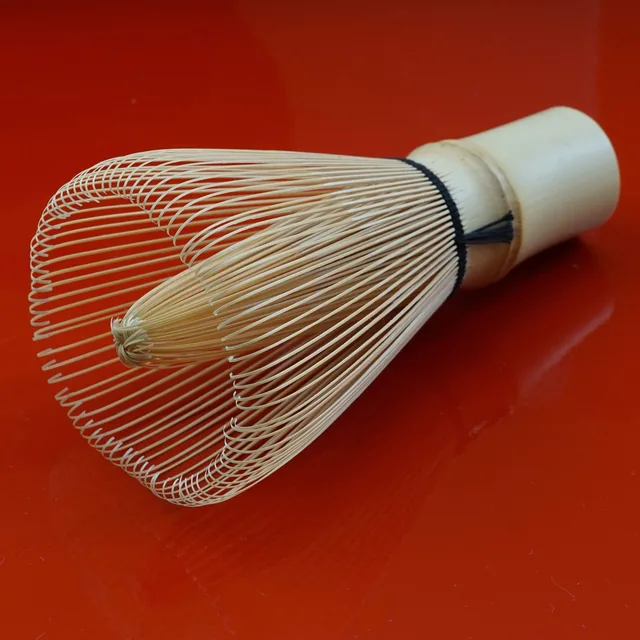
The listing also notes that the region’s cold, snowy winters produce the dense, slow-grown bamboo the whisks are cut from. This product is stated as an 80-prong whisk. That published count gives you a concrete feature to compare, while Jade Leaf’s lower-cost listing does not publish its count.
What you are actually paying for
Set the two side by side.
| Supermarket bamboo whisk | Takayama chasen (Wakasa Inoue) | |
|---|---|---|
| Price | about $13 | about $38 (as of Aug 24, 2026) |
| Where made | usually unstated | Takayama, Nara, stated |
| Made by | a factory | a named master craftsman (per the seller) |
| Prongs | often unpublished | 80, stated |
| Mark of origin | none | Nara Takayama Kitemark |
| Still a consumable? | yes; Jade Leaf states 3-6 months for its whisk | yes; no lifespan figure recorded |
The honest line at the bottom of that table is the last one. This chasen is still a bamboo tool that will wear with use. The listing does not provide a lifespan figure for this SKU, so the Jade Leaf estimate should not be transferred to it. The case for paying more rests on the named maker, stated Takayama origin, 80-prong specification and hand-cut craft, not on an unrecorded promise that it will last a particular number of months.
Who it’s best for
This chasen is for someone who makes matcha daily, wants the 80-prong whisk used for everyday thin tea, and will store it on a holder to keep the prongs splayed. It is the upgrade for a routine that has already outgrown a cheap whisk shedding tines. A $13 pair remains the lower-cost way to establish a new matcha habit, while an electric frother serves a different routine.
Bottom line
The cheap whisk and this one can both mix matcha. This one is presented by the seller as the work of a named maker in Takayama, marked with the region’s kitemark and cut from winter bamboo. About $38 as of August 24, 2026 buys the stated maker and origin, not an anonymous factory description. It remains a bamboo tool that will wear with use.
To compare this craft-first choice with three lower-cost beginner routes, see our best matcha tools for beginners guide. For where matcha itself fits, and why it beats coffee for a calm, long focus, see our guide to matcha subscription boxes.