Kanagawa Guides
Kamakura Day Trip: Self-Guided Route vs Tour, Prices, and Booking
Affiliate disclosure: This page contains affiliate links. If you book or buy through them, we may earn a commission at no extra cost to you. As an Amazon Associate we earn from qualifying purchases.
CHOOSE YOUR NEXT STEP
- Shape: Begin with Kamakura's shogun shrine, use Komachi Street for appetite and shopping, then take the Enoden to Hase for temple gardens and the Great Buddha.
- Route: Kamakura Station → Tsurugaoka Hachimangu → Komachi Street → Hase Station → Hasedera → Kotoku-in; add the coast only if time and weather still help.
- Choice: Walk independently for freedom, or book the selected 3.5-hour English tour for a guide, compact history, and a group capped at 10.
- Condition: The tour excludes transport and temple admission; the live listing states a combined ¥1,200.
Kamakura works when it feels like one old capital opening toward the sea, not a race through unrelated temples. Give the shogun story the morning, let Komachi Street supply human energy, then ride the small Enoden train to Hase for gardens, hillside views, and the Great Buddha.
CHOOSE HOW THE OLD CAPITAL OPENS
Keep the full day free, or understand the shogun city in one morning?
SHRINE + SHOPS + HASE AT YOUR PACE
I want the whole Kamakura day flexible
Walk the shrine and Komachi Street, then ride the Enoden to Hasedera and the Great Buddha.
Follow the free one-day route
3.5-HOUR SMALL-GROUP WALK
I want one connected story before the afternoon
An English guide connects the shrine, Komachi Street, Great Buddha and Hasedera in a group capped at 10.
Check your date and current priceLunch, transport and temple admission are separate. The tour is not wheelchair accessible and is not recommended for travelers with back problems.Still choosing your Kanagawa day? Compare temples, island coast, mountain and onsen, or harbor city in the complete Kanagawa guide.
What the two options mean
Keep the whole day flexible: Follow the shrine-to-Hase route independently when gardens, shops, lunch, and the sea matter as much as interpretation. The official Kanagawa route links Hase Station, Hasedera, the Great Buddha, Kamakura Station, and Tsurugaoka Hachimangu.
Use a guide for the story: The listed 3.5-hour English route covers Tsurugaoka Hachimangu, Komachi Street, the Great Buddha, and Hasedera, then ends at Hase Station. The live listing checked September 8, 2026 showed a maximum of 10 guests; lunch, transport, and temple admission were separate. Its product photo and booking button appear once in the opening choice.
What each chapter is for
This is not just the first photograph. The shrine is the spiritual center of the former capital. Use the broad approach, ponds, bridges, and main sanctuary to understand why Kamakura became a shogun city.
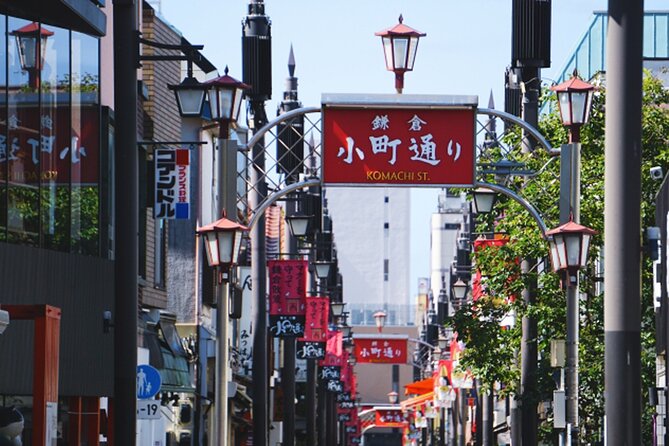
Return through the shopping street after the shrine. Choose one snack or lunch and one thing worth carrying home; do not let repeated queues consume the Hase half of the day.
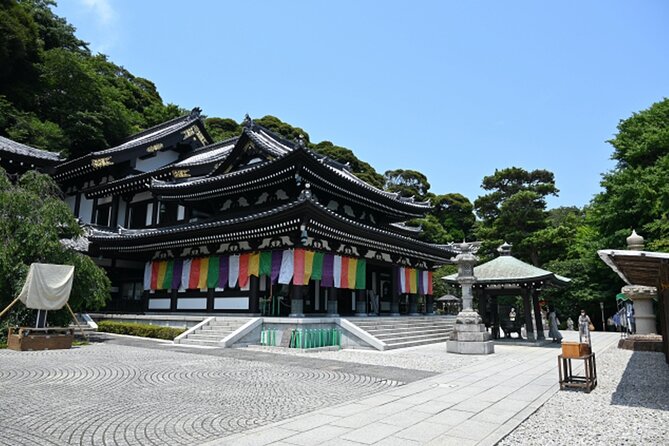
The gardens and hillside view change the scale after the busy station area. Give the temple enough time to climb slowly rather than treating it as a corridor to the Buddha.
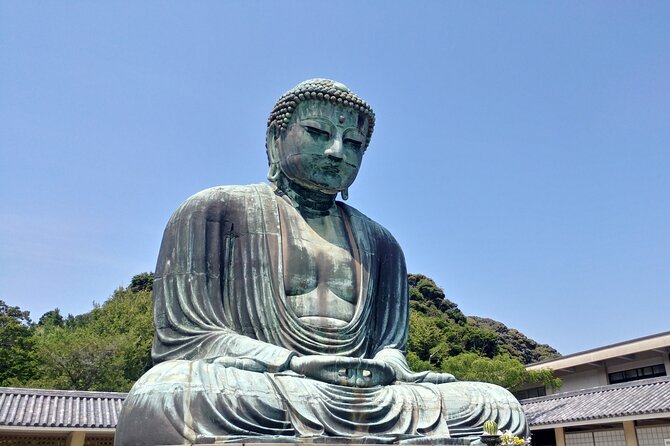
The Great Buddha is strongest as the final historic stop. From there, return by Hase Station or walk toward the coast when daylight and weather still deserve another chapter.
A simple self-guided schedule
- 9:00 - Kamakura Station. Walk the main approach to Tsurugaoka Hachimangu before Komachi Street becomes the whole story.
- 9:20 - Tsurugaoka Hachimangu. Allow roughly an hour for the approach and shrine grounds.
- 10:30 - Komachi Street. Browse and eat deliberately. Keep lunch compact if Hase is the main afternoon.
- 12:30 - Enoden to Hase. The official route lists about five minutes on the train between Kamakura and Hase, before walking to the temples.
- 13:00 - Hasedera. The official route allocates about 60 minutes.
- 14:15 - Great Buddha at Kotoku-in. The official route allocates about 30 minutes after the walk from Hasedera.
- 15:15 onward - choose the ending. Return to Kamakura for more shopping, or continue toward the coast. Do not add Enoshima merely because it is on the same railway.
Before you reserve
- Know what the guide replaces. The selected tour gives you a compact historical sequence; it does not include lunch or a full independent day.
- Check the meeting and ending. The live listing meets at Kamakura City Tourist Information Center at 10:00 and ends at Hase Station.
- Budget the exclusions. Guide service is included. Transport and admissions are not; the listing states a combined ¥1,200 as of September 8, 2026.
- Check the walking conditions. The listing marks the tour stroller accessible but not wheelchair accessible and not recommended for travelers with back problems.
- Use the live booking terms. Availability, price, meeting instructions, cancellation, rating, and review counts can change.
If weather, crowds, or mobility change the day
In rain, protect the shrine, Hasedera, and Great Buddha, then remove the exposed coast. On a dense weekend, visit the shrine first and treat Komachi Street as a short return chapter rather than a queueing mission. If slopes, stairs, or prolonged walking are a concern, do not rely on the selected group tour: build an independent route around live station, taxi, and facility accessibility information.
Why this beats a checklist
The long teacher itinerary is excellent for confident walkers who want breakfast, a quieter extra temple, local shops, lunch, Hasedera, the Great Buddha, and possibly a hike. This plan is shorter on purpose: it keeps the essential shrine, shopping, temple, Buddha, transport, food decision, sea option, weather fallback, and one verified booking path visible without requiring a visitor to read the whole day before acting.
Sources and notes
- Kamakura Day Trip Itinerary, Truly Tokyo, accessed 2026-09-08. Teacher structure, walking sequence, shopping and optional coast.
- Tsurugaoka Hachimangu, Visit Kanagawa, accessed 2026-09-08. Shrine history and role in Kamakura.
- Official Great Buddha of Kamakura route, Kanagawa Prefectural Government, accessed 2026-09-08. Station, walking, temple, shrine, meal and timing sequence.
- Kamakura Walking Tour - The City of Shogun, Viator, accessed 2026-09-08. Product code, route, duration, language, inclusions, exclusions, meeting and end points, group size, accessibility, rating and review display.