Tokyo Neighborhoods
Senso-ji Temple Guide: Walk Asakusa from Kaminarimon to the Main Hall
Affiliate disclosure: This page contains affiliate links. If you book or buy through them, we may earn a commission at no extra cost to you. As an Amazon Associate we earn from qualifying purchases.
CHOOSE YOUR NEXT STEP
- Walk in this order: Kaminarimon, Nakamise, Hozomon, jōkōro, then the Main Hall.
- Senso-ji traces its tradition to 628; today's Main Hall was rebuilt in 1958.
- Receive incense smoke gently as a prayerful custom, not a medical treatment.
- Continue the temple visit with ningyo-yaki, a half-day Asakusa route, or a timed food tour.
Senso-ji is easiest to enjoy as a sequence, not a photo stop. Start at Kaminarimon, let Nakamise set the pace, pass through Hozomon, pause at the incense burner, and finish at the Main Hall before deciding whether Asakusa becomes a food, river, or Skytree afternoon.
CHOOSE WHAT HAPPENS AFTER THE TEMPLE
Walk the temple free, or turn old Asakusa shops into lunch
ADD A GUIDED LUNCH
I want five or more local food stops
Check your date and current price See tastings, route & conditions →The walk: Kaminarimon to the Main Hall
1. Kaminarimon: enter through the Thunder Gate
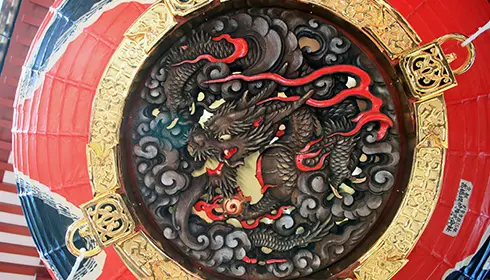
Kaminarimon is the formal outer gate of Senso-ji, officially called the Gate of the Wind and Thunder Gods. The red lantern is a useful place to meet a group or begin a walk, but the gate is more than an image: the paired deities are part of the entrance into a temple precinct.
The gate in front of you was rebuilt in 1960, 95 years after the previous gate burned. That puts a surprisingly modern landmark at the beginning of a much older religious route. Take your photograph, then move through rather than allowing the entrance to become the whole visit.
2. Nakamise: let the approach be part of the visit
Nakamise is Senso-ji’s main approach, running from Kaminarimon to Hozomon. The temple describes its roughly 250-metre length as one of Japan’s oldest shopping streets. It began around 1685, when local residents who helped keep the precinct clean were allowed to open stalls; that is why snacks and small goods are built into the walk rather than appended to it.
Do not try to treat every storefront as a mandatory stop. A better rhythm is to walk toward the temple first, note one or two things to return to, and keep the central purpose of the route clear. If a warm sweet is what you want from the approach, use our ningyo-yaki guide within the Asakusa route after the visit to choose it with its local story in mind.
3. Hozomon: the gate that frames the Main Hall
At the end of Nakamise, Hozomon is the large vermilion gate before the Main Hall. It was formerly known as Niomon because of the guardian figures at its sides. The 1945 air raids destroyed the earlier gate along with major temple buildings; the present structure was rebuilt in 1964 and renamed Hozomon because it stores scriptures and temple treasures.
This is the point to slow down. The visual sequence becomes clearer here: the Main Hall is directly ahead, and the five-story pagoda is to one side. Keep moving with the visitors around you, then choose a respectful pause in the open space before the hall.
4. Jōkōro: receive the incense smoke with care
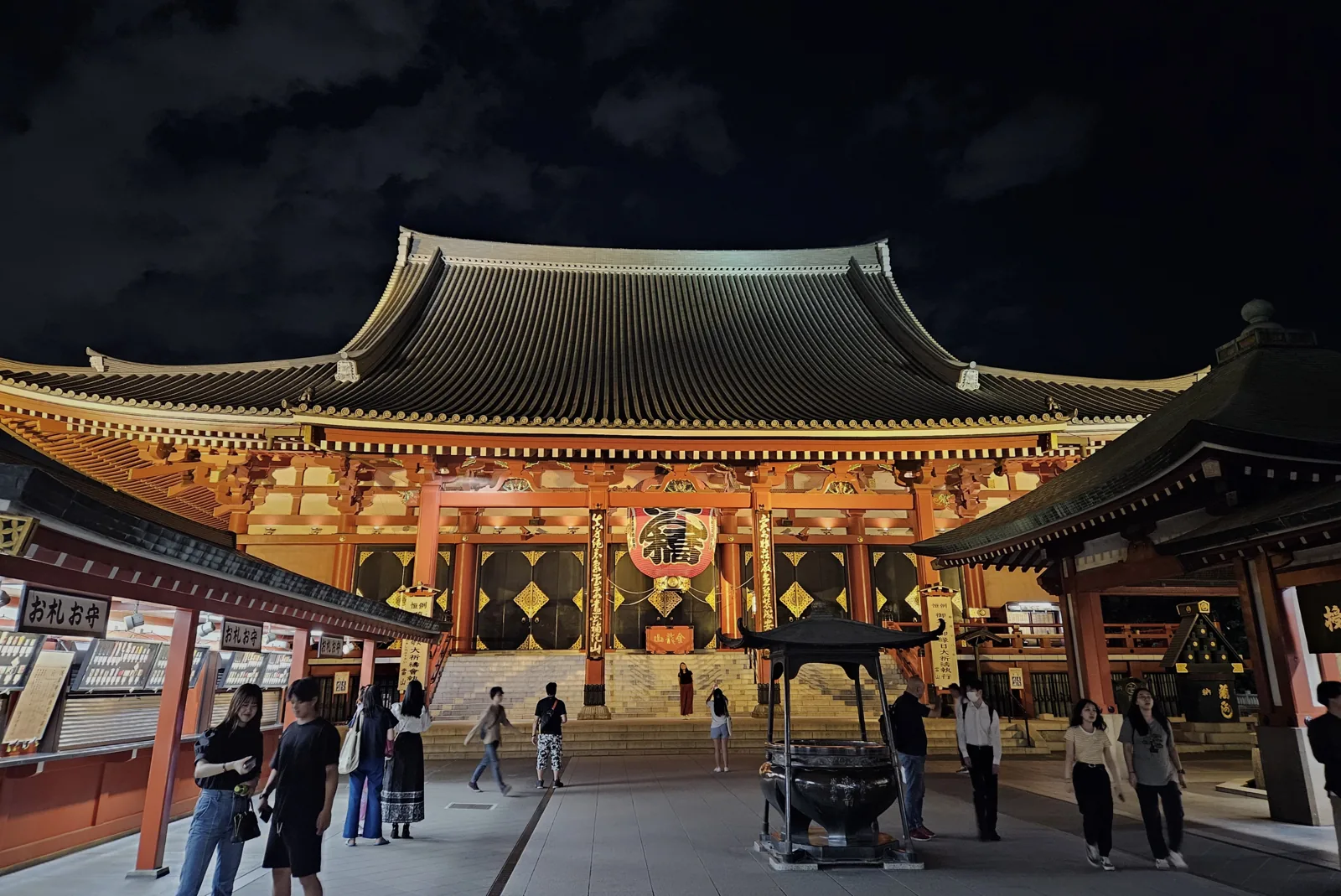
Before the Main Hall is the jōkōro, the large incense burner. Senso-ji describes visitors receiving the rising smoke and praying for health and well-being. Many people use a hand to waft a little smoke toward their head or body.
The useful way to understand the gesture is as a small act of prayer and custom. Stand back, draw only a little smoke toward yourself, and make room for the next person. Do not treat it as medicine, push through the crowd, point smoke at someone else, or lean in to inhale it directly.
5. Main Hall: finish the route where worship takes place
The Main Hall, also called the Kannon Hall, is the center of Senso-ji. Its principal image is the Kannon figure at the heart of the temple’s founding tradition. The present hall was completed in 1958 after the previous National Treasure hall was destroyed in the March 1945 air raid.
If you want to take part, keep it simple. At the water pavilion on the right side before the hall, the temple’s own instructions are to rinse the left hand, then the right, pour water into the left hand to rinse the mouth without touching the dipper, then tip the dipper to rinse its handle. At the hall, Senso-ji’s FAQ invites worshippers to put their hands together and say Namu Kanzeon Bosatsu. Follow the posted instructions and the people praying around you; the temple is an active place of worship, not a performance to rush through.
Why the history changes the walk
Senso-ji’s tradition places the appearance of its Kannon image in 628, when two fishermen found the image in what is now the Sumida River. In 645, the priest Shokai established a Kannon hall here and the principal image was kept as a hidden Buddha. Those two dates explain why the walk ends in a hall of worship, not simply at a famous building.
In the Edo period, Senso-ji also became a place where ordinary people came for worship, leisure, food, and entertainment. The temple’s own history describes an area busy with tea houses, stalls, and performances in the Okuyama behind the hall. Nakamise’s food-and-shopping rhythm is therefore not an interruption to the temple story. It is part of the long relationship between the precinct and the people who came to it.
The continuity was broken by the March 1945 air raids, which destroyed the Main Hall and other major structures. Reconstruction followed through donations and support from worshippers: the Main Hall was completed in 1958, Kaminarimon in 1960, and Hozomon in 1964. The gate-to-hall walk is consequently a route through both old custom and postwar rebuilding.
Omikuji and a few choices that should stay optional
Senso-ji’s FAQ says that omikuji was transmitted to the temple as part of a practice widely popularized in Japan by Ryogen of Enryaku-ji. If you draw one, treat it as a moment within the visit rather than a requirement for completing it. The temple’s displayed rules and the flow of the precinct matter more than finishing a checklist.
The same is true of every optional stop. You can take a photograph at Kaminarimon, buy a snack on Nakamise, receive incense smoke, make a short prayer, or take an omikuji. None needs to become an obstacle to the next visitor. Leaving enough room for the actual temple visit makes the whole route feel more human.
Fit Senso-ji into an Asakusa half-day
Avoid choosing a precise crowd-free hour as if the precinct were predictable. Instead, keep the temple as the first fixed part of the area, give the route enough unbooked time to move at the pace of the day, and use the edges of the visit for food or a timed activity. A morning or an evening can both be satisfying when you do not stack every stop into one narrow window.
For the wider order of the day, use our Asakusa half-day route. It shows how temple time, Skytree, food, and a booking can belong to eastern Tokyo without forcing a rushed cross-city itinerary. For more on the approach itself, the Nakamise and Asakusa walk is the practical companion page.
Choose the meal after the temple, not instead of it
If one exact dish is the memory you want, go directly to it. Tendon or tempura gives the day a distinctly Asakusa lunch; soba is a lighter continuation; ningyo-yaki or kaminari-okoshi works as a small Nakamise taste rather than a full meal.
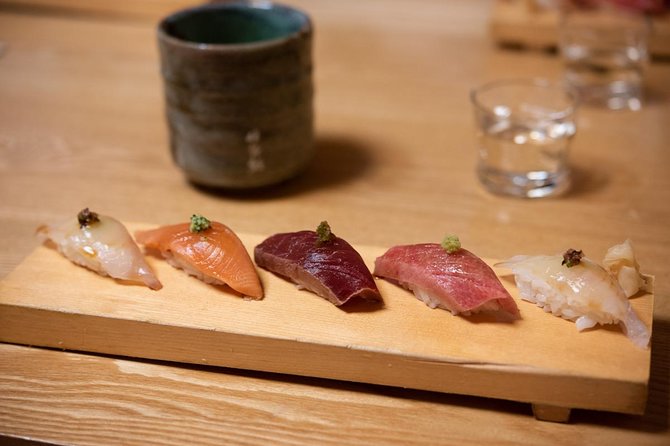
Choose Viator’s Asakusa Highlights: Street Food Crawl Tour only when Discovery is the reason to pay: a guide-led lunch across five or more vendors, including long-running shops, rather than one specified dish. The listing checked on September 1, 2026 described two hours, an 11:30 am start near Kaminarimon, an end at Senso-ji, and a maximum of two travelers. Individual dishes can change.
See Street Food Crawl dates and current price
For the direct-meal-versus-tour decision, see our Asakusa food-tour and independent-eating guide. Before reserving, confirm the selected date’s meeting point, inclusions, dietary process, accessibility, and cancellation terms.
If driving is the intended experience rather than food, the Asakusa street-kart option belongs after the temple only once the document requirements and live meeting time are settled.
Before you go
- Use the station and access route that leave you at Kaminarimon with time to walk. Senso-ji lists several Asakusa Station routes at about five minutes on foot, but the precise platform, exit, and crowd level depend on your line and time.
- Treat water purification and incense as shared spaces. Follow the temple’s steps, do not touch the dipper to your mouth, and leave room for the next visitor.
- Keep one choice optional. A snack, omikuji, or photo stop can make the visit personal without turning the approach into a checklist.
- Book only the experience that belongs after the visit. A food tour works as a continuation of an Asakusa day; it should not erase the time needed for the temple itself.
FAQ
Is Senso-ji a temple or a shrine?
Senso-ji is a Buddhist temple. Its principal image is the Holy Kannon, according to the temple’s official materials.
What is the smoke at Senso-ji for?
It rises from the jōkōro, the incense burner before the Main Hall. Visitors receive the smoke while praying for health and well-being. Use a hand to waft it lightly and treat it as a religious custom, not medical treatment.
What should I do at the water pavilion?
Follow Senso-ji’s official sequence: rinse the left hand, rinse the right, rinse the mouth using water poured into your left hand, then rinse the dipper handle. Do not put the dipper directly to your mouth.
Can I combine Senso-ji with a food tour?
Yes. It works best when the temple visit remains the first part of an eastern-Tokyo day and the live meeting time gives you enough margin to walk there without rushing.
Sources and notes
- Senso-ji official site, accessed 2026-08-30. Temple origin tradition, access, and current opening information.
- History of Senso-ji, accessed 2026-08-30. The 628 tradition, the 645 Kannon hall, Edo popular culture, 1945 destruction, and postwar reconstruction.
- Kaminarimon, Senso-ji, accessed 2026-08-30. Gate history and 1960 rebuilding.
- Nakamise, Senso-ji, accessed 2026-08-30. Approach-street history and approximate 250-metre length.
- Hozomon, Senso-ji, accessed 2026-08-30. Gate history, 1945 loss, and 1964 rebuilding.
- Main Hall, Senso-ji, accessed 2026-08-30. Main Hall role, 1945 loss, and 1958 rebuilding.
- Water-pavilion etiquette, Senso-ji, accessed 2026-08-30. Official hand-and-mouth purification sequence.
- Senso-ji FAQ, accessed 2026-08-30. Prayer wording and omikuji background.
- Sensoji Temple, GO TOKYO, accessed 2026-08-30. Visitor-facing Asakusa context.
- Kaminarimon Gate, GO TOKYO, accessed 2026-08-31. Senso-ji / Tokyo tourism image used for the lantern detail.
- Asakusa - Asakusaph.jpg, Wikimedia Commons, accessed 2026-08-31. Senso-ji Main Hall and jōkōro photo by lumoplank, dedicated under CC0 1.0; license was independently reviewed by FlickreviewR 2 on 2026-07-21.
- Asakusa Highlights: Street Food Crawl Tour, Viator, accessed 2026-09-01. Product details and booking conditions can change by date and party size.
- Restaurant Guide, Taito City official tourism information, accessed 2026-09-01. Asakusa food categories and tendon context.
