Tokyo Planning
Should You Stay Near Tokyo Station or Ginza? Choose the Right Side
Affiliate disclosure: This page contains affiliate links. If you book or buy through them, we may earn a commission at no extra cost to you. As an Amazon Associate we earn from qualifying purchases.
CHOOSE YOUR NEXT STEP
- Stay by Tokyo Station when a bullet train, airport transfer or suitcase-heavy arrival is the fixed point.
- Choose Marunouchi for the Imperial Palace side, Yaesu for buses and Nihonbashi, or Ginza when dinner, shopping and an evening walk matter more than the shortest station transfer.
- Tokyo Station has distinct west and east gate families across multiple levels, so choose the exit before judging a map distance.
- Choose Shinjuku for repeated west-Tokyo nights or Asakusa for repeated temple mornings.
Stay near Tokyo Station when the trip has one moment you cannot make awkward: arriving with luggage, catching an early bullet train, or moving between Tokyo and another city. Shift toward Ginza when the trip’s repeated pleasure is the evening: dinner, department stores, galleries and streets that remain worth walking after sightseeing.
The useful question is not whether both are “central.” It is which side should carry the weight of your trip.
Who should stay here?
Choose Tokyo Station, Marunouchi, Yaesu, Nihonbashi or Ginza when two or more are true:
- a Shinkansen departure or arrival anchors the itinerary;
- reducing suitcase transfers matters more than living beside nightlife;
- Marunouchi, Nihonbashi, the Imperial Palace side or Ginza fills several days;
- dinner and shopping in central Tokyo should end close to the room;
- the next destination matters as much as the Tokyo neighborhood itself.
Choose another base when repeated late nights belong to Shinjuku or Shibuya, or when Senso-ji mornings and east Tokyo are the trip’s emotional center. Start with our first-time Tokyo stay comparison if that choice is still open.
The four useful sides
| Side | Best for | Main trade-off |
|---|---|---|
| Marunouchi | The red-brick station, Imperial Palace side and a composed central return | You may cross the station for Yaesu-side buses or shops |
| Yaesu | Shinkansen-facing movement, highway or airport buses, and Nihonbashi access | It feels more like a transport and commercial base than a Ginza evening |
| Nihonbashi | Central food, craft history and a position east of the station | The exact station entrance may matter more than the district label |
| Ginza / Higashi-Ginza | Restaurants, department stores, galleries and Kabukiza-led evenings | It is a city base near Tokyo Station, not the same thing as staying at the station |
Tokyo Station: choose logistics first
Tokyo Station City describes the layout in a simple east-west rule: Marunouchi is west and Yaesu is east, with North, Central and South exits on both sides. Its guidance says to identify the intended exit while still on the platform level, before taking an escalator or elevator.
That matters with luggage. The official map shows ground-level and underground gates, Shinkansen transfer gates, deep platforms for the Keiyo and Yokosuka–Sobu lines, and station facilities spread across levels. “Near Tokyo Station” is incomplete until you know the gate family and line you will repeat.
Marunouchi: west side and arrival atmosphere
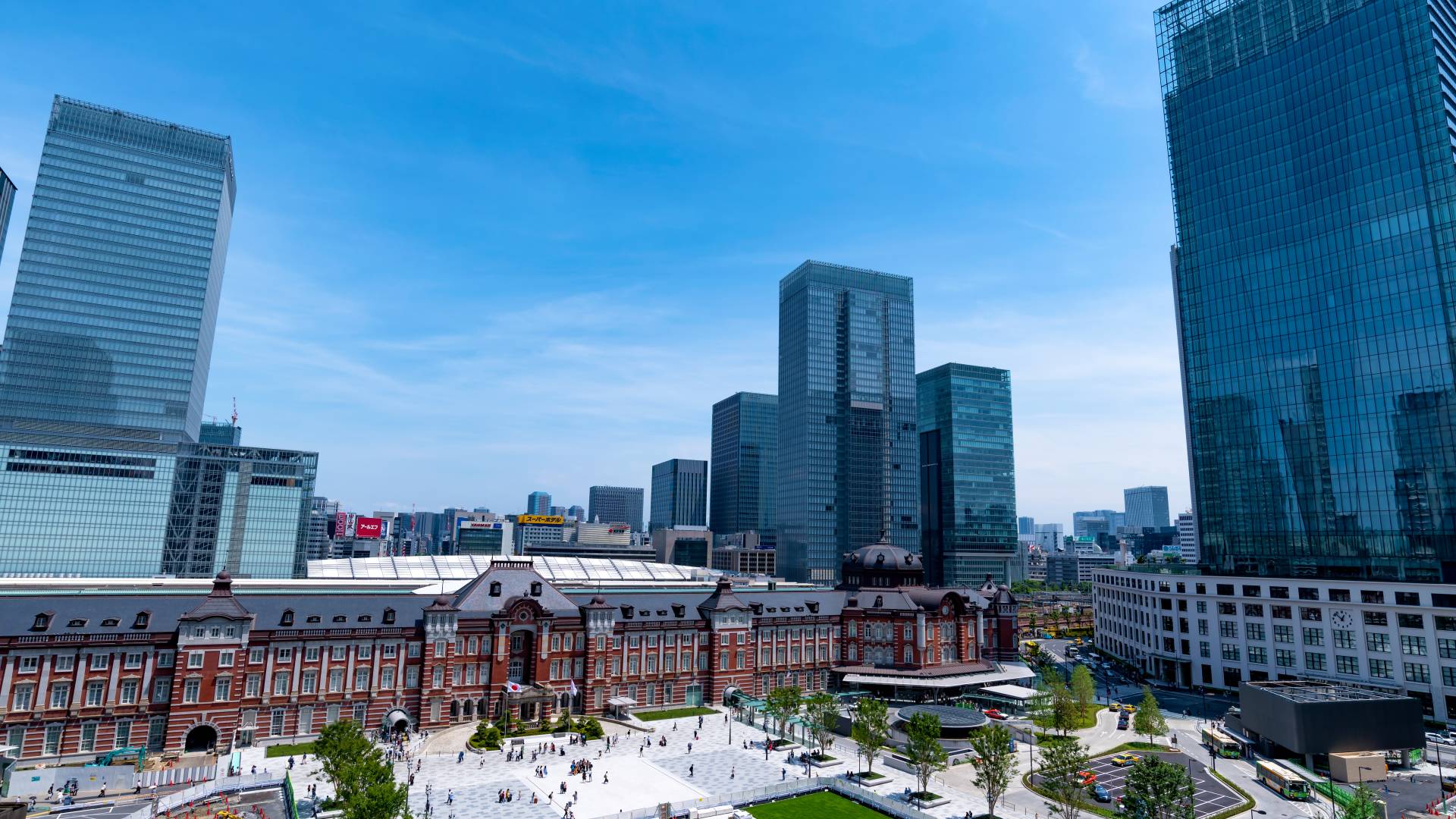
Choose Marunouchi when the red-brick station building, Imperial Palace side and the west side of central Tokyo should frame arrival and return. It is the more scenic station-facing answer. It is not automatically the shortest choice for a Yaesu-side bus or every Shinkansen platform.
Yaesu: east side and onward movement
Choose Yaesu when buses, Nihonbashi-side movement and the east side of the station are the practical anchors. Tokyo Station City’s official facilities page places a baggage-storage counter outside the Yaesu South Gate and another at the Marunouchi North Gate, confirming that luggage services also depend on which side you use.
Ginza: choose the evening you want to repeat
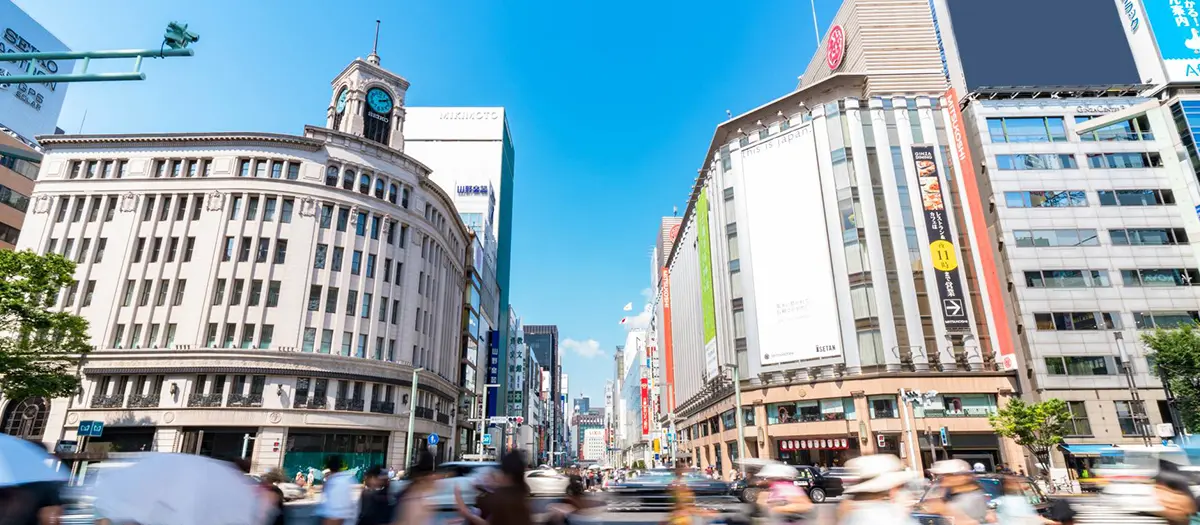
GO TOKYO defines Ginza through department stores, specialist shops, small restaurants, galleries and Kabukiza. Tokyo Metro identifies Ginza Station as G09, M16 and H09, joining the Ginza, Marunouchi and Hibiya lines.
The Marunouchi Line is especially useful for this decision: Tokyo Station and Ginza sit on the same line, while Ginza’s other two lines open different north-south and east-west routes. Ginza is therefore a central base in its own right, not merely an overflow area for Tokyo Station.
Choose Ginza when dinner, shopping and a polished evening walk will happen repeatedly. Choose the station side when catching the train with luggage is the recurring friction you want to remove.
Airport and Shinkansen test
GO TOKYO lists Tokyo Station’s airport-bus journeys at about 1 hour 20 minutes to or from Narita and 30 to 55 minutes to or from Haneda, as accessed September 1, 2026. These are district-planning figures, not live promises; traffic, terminal and departure point change the real journey.
For the Shinkansen, work backward from the exact service and departure time. Tokyo Station City’s current English guide separates boarding guidance and station maps for the Shinkansen and Narita Express and states that its guide information is current as of August 1, 2026. A room’s map distance is less useful than the door-to-gate route you can follow with luggage.
Morning, night, food and shopping
Morning
Tokyo Station suits an early departure morning: breakfast and sightseeing are secondary to removing uncertainty from the train. Marunouchi also gives the red-brick station and palace-side streets a calmer role before the business day builds.
Ginza suits a slower central morning, but its strongest reason to stay is usually later in the day. Do not choose it solely because a listing says “near Tokyo Station”; choose it because Ginza itself belongs in the itinerary.
Night
Marunouchi and Yaesu return you to a transport hub. Ginza returns you to the evening destination. If several nights end with a reserved meal or a walk through central shopping streets, shifting south can be worth more than shaving one transfer from departure day.
Food and shopping
Use the Tokyo Station and Marunouchi restaurant guide for station-day meals, the Ginza restaurant guide for destination dining, and the Nihonbashi restaurant guide when the east side offers the better daily rhythm.
Luggage test before choosing a property
- Name the exact arrival line and the gate family you need: Marunouchi or Yaesu.
- Check whether the route stays above ground, uses an underground passage, or changes levels.
- Test the trip to the exact Shinkansen or airport departure point, not just to “Tokyo Station.”
- If choosing Ginza, test the route with luggage separately from the pleasant no-luggage walk.
- Recheck live rail and airport information on the travel date.
Once you have chosen the district, compare hotels against your actual departure point: the Shinkansen entrance, airport-bus stop or subway line you will use. Check the final walk with luggage, then compare the same room occupancy, breakfast and cancellation terms for your dates. A Ginza address alone does not establish a short walk to your Tokyo Station platform.
Sources
- Tokyo Station and Marunouchi, GO TOKYO, district and airport access facts accessed September 1, 2026.
- Ginza, GO TOKYO, district and access facts accessed September 1, 2026.
- Welcome to Tokyo Station City, official east/west layout guidance accessed September 3, 2026.
- Tokyo Station map and facilities, official gates and baggage facilities accessed September 3, 2026.
- Easy to understand Tokyo Station, official guide issued August 1, 2026, accessed September 3, 2026.
- Ginza Station G09/M16/H09, Tokyo Metro, accessed September 3, 2026.